

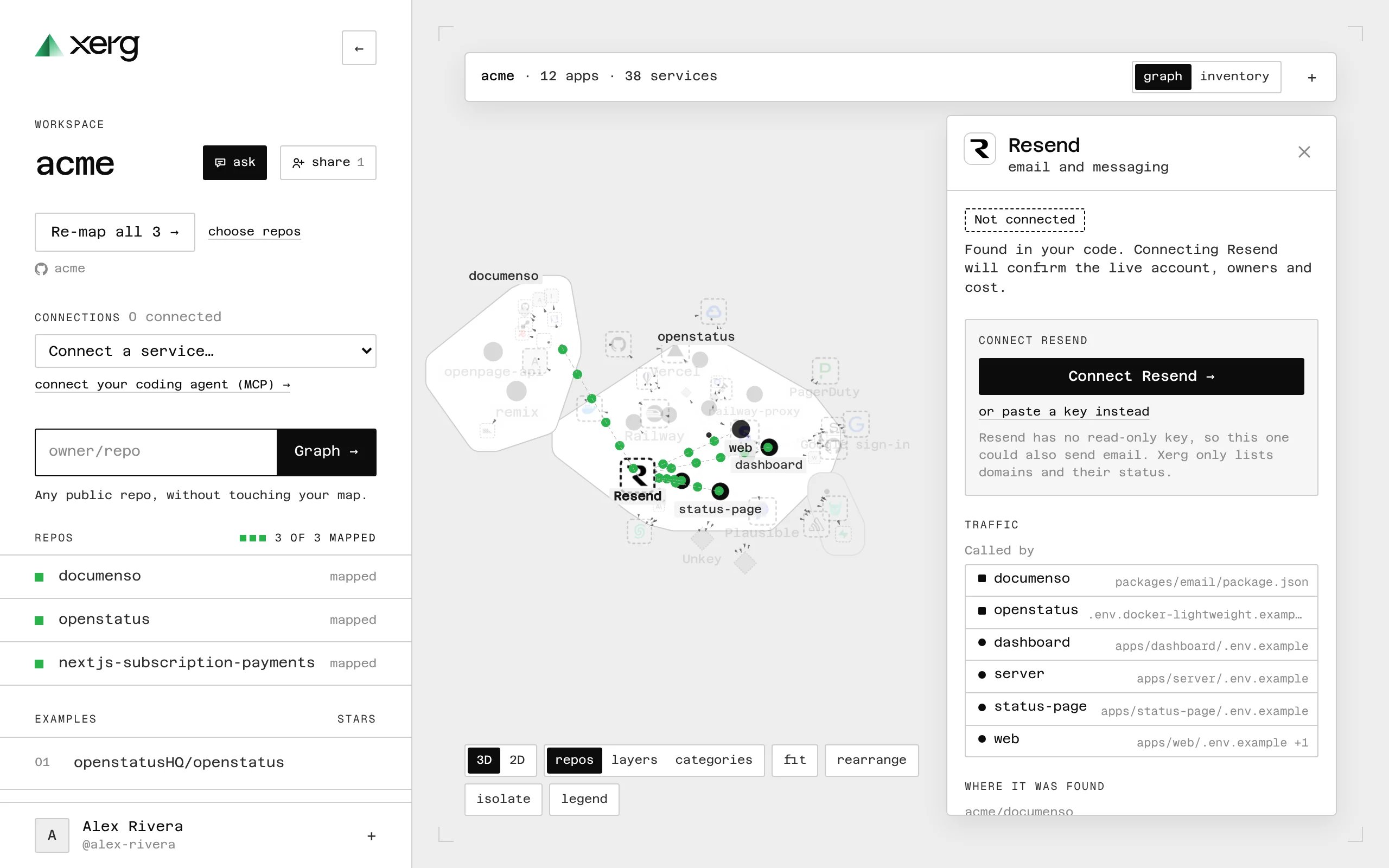
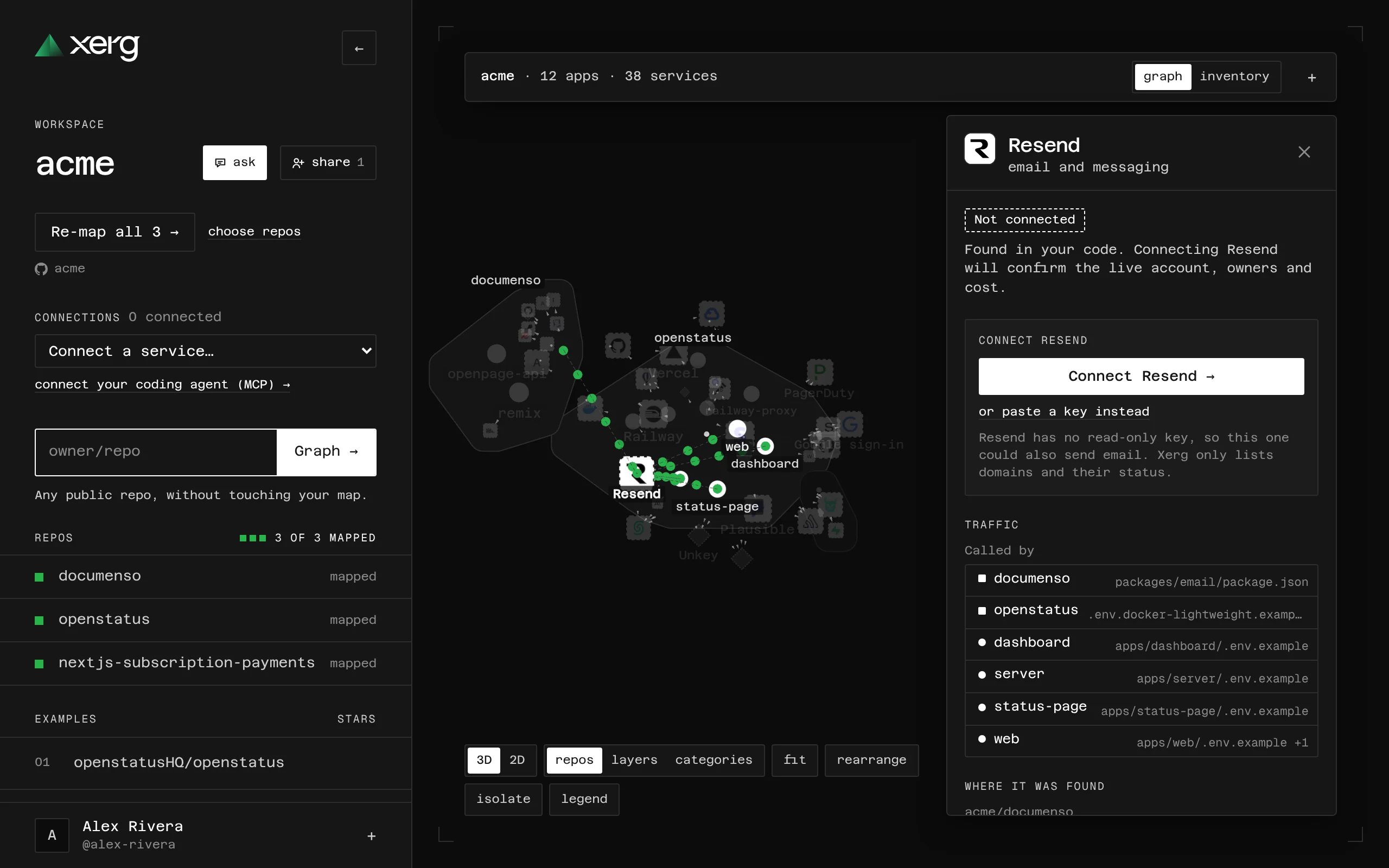
Calls
App to service: the app calls it, or stores data in it. Found from the app’s packages, env variable names and source.Webhooks
Service to app: the service calls in, the other way round. Xerg finds a webhook from:- the env variable name of its secret, like
STRIPE_WEBHOOK_SECRET,SLACK_SIGNING_SECRETorQSTASH_CURRENT_SIGNING_KEY - a route file with a webhook folder or file next to a service’s name, like
app/api/webhooks/stripe/route.ts, from the repo’s file list without reading it
What the dots don’t say
Every line moves at the same speed: dots show direction, not how much traffic there is. Lines like contains or deploys to are structure, not traffic, so they have none.In Ask and MCP
impact follows the same lines: an app that receives a service’s webhooks depends on that service. See the tool reference.